PUR vs PVC Cable Jackets for Industrial Applications

A Complete Guide for Engineers, Buyers & Facility Managers
When you are buying cables for a factory, a robotics setup, or an industrial Ethernet network, one of the most important decisions you will make is choosing the right cable jacket material. Two of the most widely used options are PVC (Polyvinyl Chloride) and PUR (Polyurethane). At first glance, they may look the same — but they behave very differently in real-world industrial environments.
In this guide, we will break down exactly what PUR and PVC cable jackets are, how they compare across key performance factors like flexibility and oil resistance, and which one is right for your specific use case. We will also cover industrial Ethernet cables — Cat5e, Cat6, Cat6A, and Cat7 — and explain how jacket type affects performance in demanding applications like robotics and automation.
Whether you are an engineer, a procurement manager, or someone setting up an industrial network for the first time, this article will help you make a confident, well-informed decision.
What Is a Cable Jacket and Why Does It Matter?
A cable jacket is the outermost protective layer of a cable. Its job is to protect the inner conductors from physical damage, moisture, heat, chemicals, and mechanical stress. Think of it as the skin of the cable — without a strong and suitable jacket, the cable cannot perform reliably or safely in tough environments.
In industrial settings, cables are exposed to a wide range of threats: oil spills, constant bending, extreme temperatures, drag chains, UV exposure, and heavy machinery. The wrong jacket material can lead to cracking, electrical failures, costly downtime, and even safety hazards.
Choosing the right jacket material — PVC or PUR — is not just a technical detail. It directly affects how long your cable lasts, how well it performs, and how much it costs to maintain over time.
What Is PVC (Polyvinyl Chloride)?
PVC is one of the most widely used cable jacket materials in the world. It is a synthetic plastic polymer known for its good electrical insulation properties, affordability, and ease of manufacturing. PVC cable jackets are found everywhere — from office buildings and factories to outdoor lighting and packaging lines.
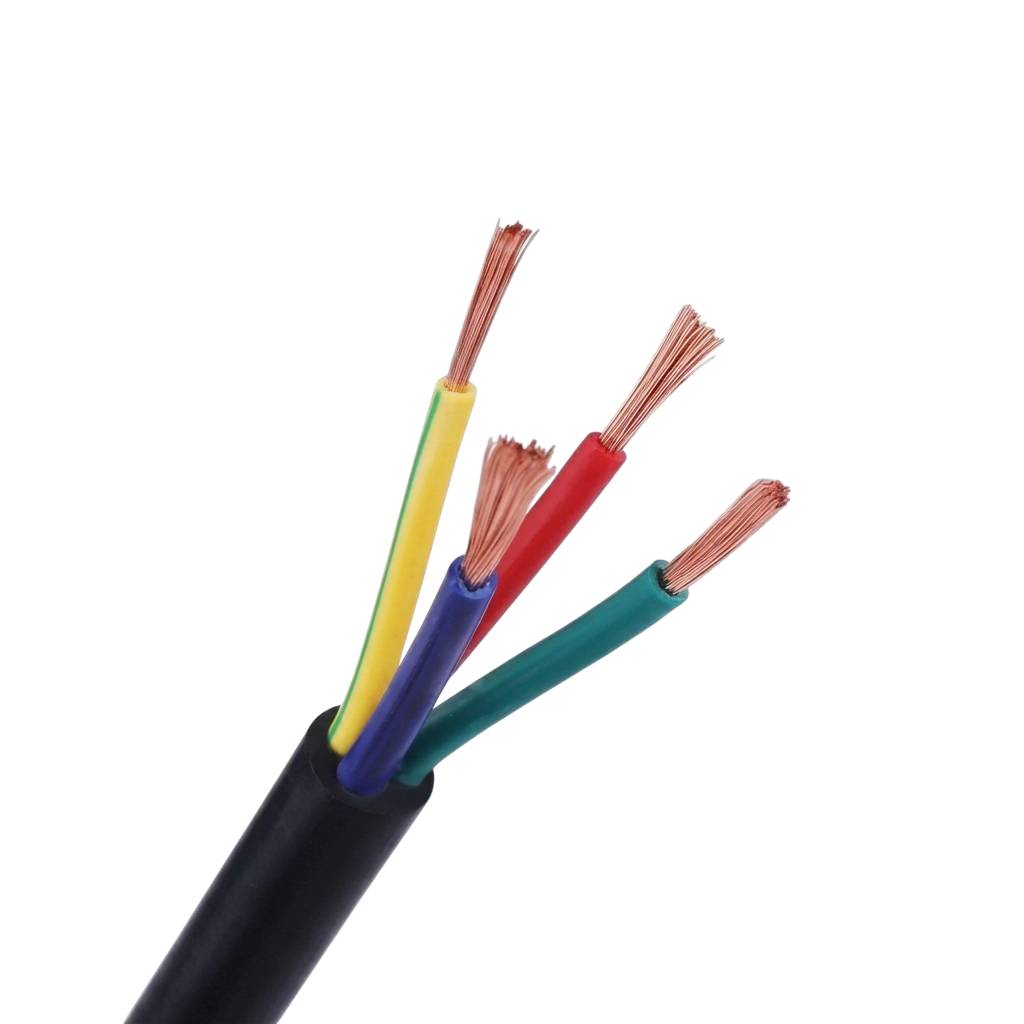
Key Strengths of PVC:
Cost-effective and widely available
Inherently flame-retardant — meets fire safety standards
Good resistance to moisture, sunlight, and general weathering
Suitable for fixed, low-movement installations
Works well in clean environments like control cabinets and conveyor systems
Limitations of PVC:
Becomes stiff and brittle in cold temperatures (below -20°C)
Lower oil resistance compared to PUR
Not ideal for continuous bending or high-flex applications
Harder to recycle and can release harmful substances if burned
PVC is a solid, reliable choice for stationary or low-stress applications. But when flexibility, oil resistance, or extreme conditions are involved, its limitations start to show.
What Is PUR (Polyurethane)?
PUR, or Polyurethane, is a high-performance thermoplastic material known for its outstanding durability and flexibility. It was developed to meet the demands of modern industrial automation, robotics, and other applications where cables are constantly moving or exposed to harsh chemicals.
PUR cable jackets are halogen-free, self-extinguishing, and maintain flexibility even in very cold temperatures — making them a favourite for demanding industrial environments.
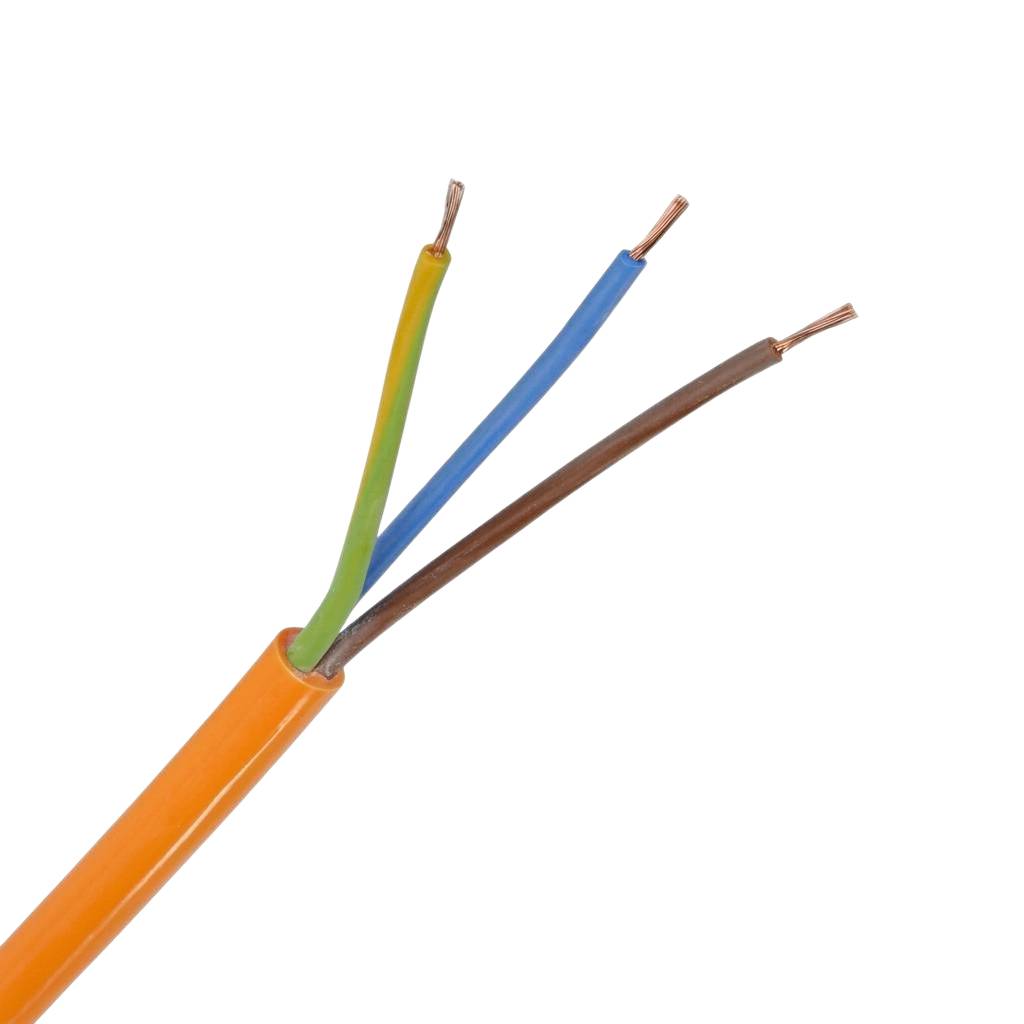
Key Strengths of PUR:
Excellent flexibility — stays pliable even at temperatures as low as -40°C
Superior oil, solvent, and chemical resistance
High abrasion and notch resistance — ideal for drag chains and robotic arms
Can withstand millions of bending cycles without cracking
Halogen-free options available — safer for enclosed spaces
UV and ozone resistant — suitable for outdoor use
Limitations of PUR:
Higher upfront cost compared to PVC
Can become rubber-like at very high temperatures, increasing internal friction in drag chains
Despite the higher cost, PUR cables often deliver a lower total cost of ownership in demanding environments because they last significantly longer and require less frequent replacement.
PUR vs PVC Cable Jackets: Side-by-Side Comparison
The table below summarises the key differences to help you compare at a glance:
Feature | PVC Cable Jacket | PUR Cable Jacket |
|---|---|---|
Flexibility | Moderate — becomes stiff in cold | Excellent — stays flexible even below -30°C |
Oil Resistance | Moderate | Excellent — ideal for machine tool areas |
Abrasion Resistance | Low to moderate | High — handles drag chains & robotics |
Temperature Range | -20°C to +70°C | -40°C to +80°C |
Chemical Resistance | Good for acids & alkalis | Good for oils, solvents & chemicals |
Flame Retardant | Yes — inherently flame retardant | Yes — halogen-free options available |
Cost | Budget-friendly | Higher cost, but lower lifecycle cost |
Best Use | Fixed, low-movement installations | Robotics, drag chains, high-flex environments |
10 Gbps for Cat6 is achievable only on shorter cable runs up to 55 metres. For full 10 Gbps over 100 metres, Cat6A is required.
Flexibility and Oil Resistance: Where PUR Wins
Two areas where PUR clearly outperforms PVC are flexibility and oil resistance — and these two factors matter most in industrial and robotics applications.
Flexibility
In robotics and automated manufacturing, cables are not just installed once and left alone. They move constantly — bending, twisting, and flexing thousands of times every single day. PVC cables were not built for this. Under repeated bending, PVC can crack, stiffen (especially in cold conditions), and eventually fail.
PUR cables are engineered for continuous movement. They can handle millions of bending cycles without degrading. This makes PUR the material of choice for applications like robotic arms, cable carriers (drag chains), automated guided vehicles (AGVs), and CNC machines.
Oil Resistance
Machine tool environments, automotive production lines, and food processing plants often have oil, coolant, and hydraulic fluid present. PVC has some resistance to oils but is not optimised for this. PUR, on the other hand, offers robust protection against oils, solvents, and many industrial chemicals — keeping the cable jacket intact even in wet, oily conditions.
|
Industrial Ethernet Cables: Cat5e, Cat6, Cat6A, and Cat7 Explained
Now that you understand PUR and PVC jacket materials, let us look at how they apply to industrial Ethernet cables — the cables that power factory networks, automation systems, machine-to-machine communication, and more.
Network cables come in different categories, each designed for different speed and bandwidth requirements. For industrial use, the most relevant categories are Cat5e, Cat6, Cat6A, and Cat7. Here is what you need to know:
Cable Type | Speed | Bandwidth | Max Distance | Best For |
|---|---|---|---|---|
Cat5e | 1 Gbps | 100 MHz | 100 m | Budget networks |
Cat6 | 10 Gbps* | 250 MHz | 55 m (10G) | Offices, SMBs |
Cat6A | 10 Gbps | 500 MHz | 100 m | Enterprise, future-proof |
Cat7 | 10 Gbps | 600 MHz | 100 m | High EMI industrial |
Cat6 supports 10 Gbps only on runs up to 55 metres. For full 100-metre runs at 10 Gbps, use Cat6A.
Cat5e — The Reliable Starter
Cat5e (Category 5 Enhanced) supports speeds up to 1 Gbps over 100 metres with a bandwidth of 100 MHz. It is the most affordable industrial Ethernet option and works perfectly well for applications that do not need multi-gigabit speeds. PVC-jacketed Cat5e is common in fixed, clean industrial environments. For high-flex or outdoor use, Cat5e with a PUR jacket is a much better choice.
Cat6 — The Smart Everyday Choice
Cat6 doubles the bandwidth to 250 MHz and supports 10 Gbps on shorter runs. It is the most popular choice for small-to-medium industrial deployments because it offers a strong balance of performance and cost. PUR-jacketed Cat6 cables are ideal for robotic workstations and flexible production lines where movement and durability are both important.
Cat6A — The Future-Proof Industrial Standard
Cat6A (Augmented Category 6) delivers full 10 Gbps over the entire 100-metre distance with 500 MHz bandwidth. It also has much better protection against Alien Crosstalk (AXT) — unwanted interference from neighbouring cables. In high-density industrial environments with lots of cables running close together, Cat6A makes a noticeable difference in signal quality. For demanding industrial Ethernet applications like EtherNet/IP or PROFINET, Cat6A with a PUR jacket is the recommended choice.
Cat7 — Maximum Shielding for Noisy Environments
Cat7 uses S/FTP shielding — every twisted pair is individually wrapped in foil, then covered by a braided outer shield. This gives it outstanding protection against electromagnetic interference (EMI), which is critical in electrically noisy industrial environments near motors, inverters, and heavy machinery. With 600 MHz bandwidth and a PUR jacket option, Cat7 is the go-to for applications where signal integrity cannot be compromised.
Which Jacket Should You Choose for Industrial Ethernet?
The answer depends on how and where the cable will be used:
Fixed Installation (Stationary): Choose PVC-jacketed Cat5e, Cat6, or Cat6A. It is cost-effective, flame-retardant, and perfectly adequate for cables that are routed and left in place. |
High-Flex / Robotics / Drag Chain: Choose PUR-jacketed Cat6 or Cat6A. PUR handles constant movement without cracking or degrading, ensuring long-term reliability in robotic arms, cable carriers, and automated systems. |
Oily or Chemical-Exposed Environments: Choose PUR-jacketed cables for any application where oil, coolant, or industrial chemicals may contact the cable. PUR is engineered to resist these substances. |
High EMI / Electrically Noisy Areas: Choose PUR-jacketed Cat7 with S/FTP shielding. This combination gives you maximum signal protection and jacket durability in electromagnetically challenging environments. |
Where to Buy Industrial Ethernet Cables in India
If you are looking for high-quality industrial Ethernet cables with both PVC and PUR jacket options, Eleczo, is one of the most reliable online platforms in India for industrial electrical and networking products.
At Eleczo, you can find a carefully curated range of industrial-grade internet and Ethernet cables including:
Cat5e cables — for budget-friendly, reliable 1 Gbps networking
Cat6 cables — the most popular choice for offices, factories, and SMBs
Cat6A cables — for 10 Gbps industrial Ethernet over full 100-metre runs
Cat7 cables — for high-shielding applications in noisy industrial environments
All products on Eleczo, are sourced from trusted brands and verified suppliers, ensuring you get cables that meet the performance standards your application demands. Whether you need cables in bulk for a factory project or a few metres for a specific machine connection, Eleczo makes it easy to find, compare, and order the right cable.
Shop Now: Visit Eleczo, today to browse Cat5e, Cat6, Cat6A, and Cat7 industrial Ethernet cables with PVC and PUR jacket options. Reliable products, competitive prices, and fast delivery across India. |
Final Thoughts
Choosing between PUR and PVC cable jackets is not about one being universally better than the other. It is about matching the right material to the right application.
PVC is a dependable, cost-effective solution for fixed, low-stress environments. PUR is the high-performance choice for robotics, drag chains, oil-exposed areas, and anywhere cables need to flex repeatedly without failing.
For industrial Ethernet networks, pairing the right cable category — Cat5e, Cat6, Cat6A, or Cat7 — with the right jacket material ensures your network stays fast, reliable, and maintenance-free for years to come.
Explore the full range of industrial Ethernet cables with PVC and PUR jacket options at Eleczo, — your trusted source for industrial electrical and networking products in India.
Frequently Asked Questions (FAQs)
Is PUR cable worth the extra cost?
Yes — in the right applications. If your cables are used in robotics, drag chains, or oil-exposed environments, PUR cables last significantly longer than PVC. The higher upfront cost is offset by reduced replacements and less downtime over time.
Can I use PVC cables in a robotic arm?
It is not recommended. PVC becomes stiff in cold temperatures and can crack under repeated bending. For robotic arms and other high-flex applications, PUR-jacketed cables are the correct and safer choice.
What is the difference between Cat6 and Cat6A for industrial use?
Cat6 supports 10 Gbps up to 55 metres. Cat6A supports 10 Gbps over the full 100 metres and offers better resistance to Alien Crosstalk (AXT). For serious industrial installations, Cat6A is the recommended choice.
Are PUR cables halogen-free?
Yes, many PUR cables are halogen-free and self-extinguishing, making them safer for enclosed spaces where toxic smoke from burning cables would be a hazard.
Which Ethernet cable is best for industrial automation?
For most industrial automation applications including EtherNet/IP and PROFINET, Cat6A or Cat7 cables with PUR jackets are recommended. They offer the bandwidth, signal integrity, and durability required for demanding factory environments.